
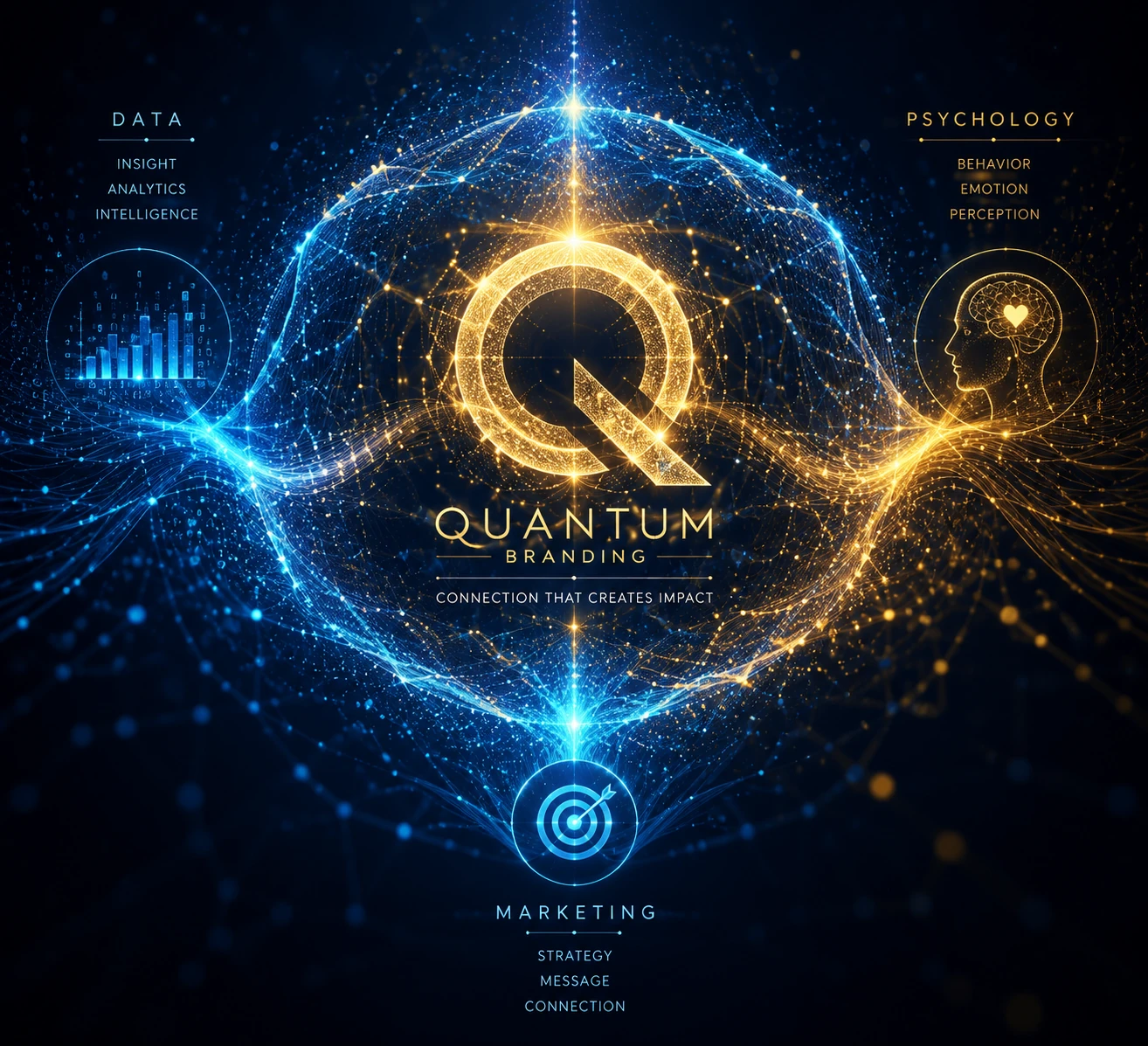
What Is Quantum Branding? A New Approach to Future Brands
What Is Quantum Branding? A New Approach to Future Brands
Brands do not always grow in a straight line. Sometimes, a small experience, a single interaction, or even one emotional moment can create a major shift in how people perceive a brand.
This non-linear behavior in markets and customer decisions has created the foundation for a new concept in brand strategy: Quantum Branding.
Quantum Branding is a modern approach to building and managing brands in a world where customer behavior is complex, emotional, and often unpredictable.
Instead of seeing a brand as something fixed and static, Quantum Branding views a brand as a dynamic system that can create different perceptions in the minds of different audiences.
What Is Quantum Branding?
Quantum Branding is a new approach to brand management that considers customer behavior as probabilistic, brand perception as multi-layered, and the market as constantly changing.
In traditional branding, a brand is often treated as a fixed identity with one clear message. But in Quantum Branding, a brand is understood as a living and flexible system.
This means that a brand can be perceived differently depending on:
- The customer’s experience
- The emotional context
- Social influence
- Media exposure
- Timing
- Personal expectations
In this model, the brand is not only what the company says it is. It is also what customers experience, interpret, and remember.
Why Do Brands Need a Quantum Branding Model?
Modern customers are not always logical or predictable. Their buying decisions are often influenced by emotions, social environments, digital content, personal experiences, and even small moments of interaction.
A customer may choose a brand because of trust, design, storytelling, social proof, or a feeling that is difficult to explain logically.
This is why traditional branding models are no longer enough for many modern markets.
Classic branding usually assumes that if a brand delivers one clear message consistently, customers will respond in a predictable way. But today’s market is more complex than that.
Customers interact with brands across multiple channels, including:
- Websites
- Social media
- Online reviews
- Advertising
- Customer service
- Influencers
- Personal recommendations
Each interaction can change the customer’s perception of the brand.
Quantum Branding helps businesses understand this complexity and design brand strategies that are more flexible, adaptive, and human-centered.
The Three Core Principles of Quantum Branding
Quantum Branding is based on several key ideas that explain how modern brand perception works.
1. The Principle of Uncertainty
In Quantum Branding, customer perception is never completely fixed.
A customer’s view of a brand can change quickly based on one experience, one message, or one interaction.
For example, a customer may have a positive opinion of a brand for years, but one poor customer service experience can change that perception immediately.
On the other hand, a small positive experience can create strong emotional loyalty.
This means brands must manage every touchpoint carefully because even small details can influence customer perception.
2. The Observer Principle
In Quantum Branding, perception depends on the observer.
This means that different customers may see the same brand in different ways.
One person may see a brand as innovative. Another may see it as expensive. Another may see it as trustworthy, while someone else may see it as inaccessible.
The brand does not exist only as a fixed message created by the company. It exists in the mind of each customer.
That is why understanding different audience segments is essential. A strong brand strategy should allow different customers to connect with the brand in meaningful ways while still protecting the brand’s central identity.
3. The Coexistence of Brand Narratives
A successful brand can have multiple valid narratives at the same time.
For example, a brand can be:
- Professional for corporate clients
- Creative for young audiences
- Reliable for long-term customers
- Innovative for technology-focused users
These narratives may look different, but they can all exist under one central brand identity.
This is one of the most important ideas in Quantum Branding. A future-ready brand does not need to be limited to one simple story. It can create several meaningful experiences while staying true to its core values.
Quantum Branding vs. Traditional Branding
Traditional branding and Quantum Branding have different views of how brands grow and how customers make decisions.
Traditional Branding
Traditional branding is usually:
- Linear
- Fixed
- Message-centered
- Predictable
- Focused on consistency
In this model, the brand creates one main message and repeats it across different channels.
This approach can still be useful, especially for building recognition. However, it may not be enough in fast-changing markets where customers behave differently across platforms and situations.
Quantum Branding
Quantum Branding is:
- Dynamic
- Multi-layered
- Experience-centered
- Perception-based
- Adaptive
Instead of focusing only on what the brand says, Quantum Branding focuses on what customers experience and how they interpret those experiences.
The goal is not just to communicate a message. The goal is to create meaningful brand perceptions across different customer journeys.
Why Brand Perception Matters More Than Ever
In today’s market, customers do not only buy products or services. They buy meaning, trust, emotion, identity, and experience.
A brand can invest heavily in advertising, but if the customer experience is weak, the brand perception will suffer.
On the other hand, a brand with a strong customer experience can grow faster through loyalty, recommendations, and emotional connection.
This is why Quantum Branding places customer perception at the center of brand strategy.
Brand perception is shaped by:
- Visual identity
- Tone of voice
- Customer service
- Product quality
- Social media presence
- Storytelling
- Reviews and testimonials
- Emotional experience
Every touchpoint becomes part of the brand’s reality.
How Businesses Can Use Quantum Branding
Businesses can apply Quantum Branding by designing more flexible and customer-aware brand strategies.
Here are several practical ways to use this model:
1. Map Customer Touchpoints
Identify all the places where customers interact with your brand, from your website and social media to sales conversations and after-sales support.
Each touchpoint can influence brand perception.
2. Understand Different Audience Segments
Not all customers see your brand the same way. Study different customer groups and understand their needs, expectations, and emotional triggers.
3. Build a Flexible Brand Narrative
Your brand should have a clear core identity, but it should also be flexible enough to communicate with different audiences in different contexts.
4. Focus on Experience, Not Just Message
A strong slogan is not enough. Customers remember how your brand made them feel.
The experience should support the message.
5. Monitor Perception Continuously
Use customer feedback, reviews, surveys, social listening, and data analysis to understand how people perceive your brand over time.
The Future of Branding Is Dynamic
The future of branding belongs to companies that understand complexity.
Brands can no longer rely only on fixed messages and traditional campaigns. They need to understand how people think, feel, react, and change.
Quantum Branding helps businesses build brands that are:
- More adaptive
- More human-centered
- More emotionally intelligent
- More competitive
- More prepared for future markets
A future-ready brand is not rigid. It is clear at its core, but flexible in experience.
Conclusion
Quantum Branding is a response to the complexity of modern customer behavior.
It helps businesses understand that brands are not fixed objects. They are dynamic systems shaped by perception, experience, emotion, and context.
Companies that apply Quantum Branding in their brand strategy can build stronger, more flexible, and more meaningful brands.
In competitive markets, the brands that win are not always the loudest. They are the brands that understand how customers perceive, experience, and connect with them.
Frequently Asked Questions
What is Quantum Branding?
Quantum Branding is a modern approach to brand strategy based on probabilistic customer behavior, multi-layered brand perception, and non-linear brand growth.
How is Quantum Branding different from traditional branding?
Traditional branding is usually linear, fixed, and message-centered. Quantum Branding is dynamic, multi-layered, and focused on customer perception and experience.
Is Quantum Branding scientific?
Yes. Quantum Branding is inspired by quantum decision-making models, behavioral psychology, customer perception studies, and complexity thinking.
Why is Quantum Branding important for modern businesses?
Because modern customers are influenced by emotions, social context, media, and real-time experiences. Quantum Branding helps businesses adapt to this complexity.
Can small businesses use Quantum Branding?
Yes. Small businesses can use Quantum Branding by improving customer experience, understanding different audience perceptions, and creating flexible brand narratives.
Further Reading
To understand how behavioral science influences customer decisions, read this article from Harvard Business Review:
The New Science of Customer Emotions – Harvard Business Review